
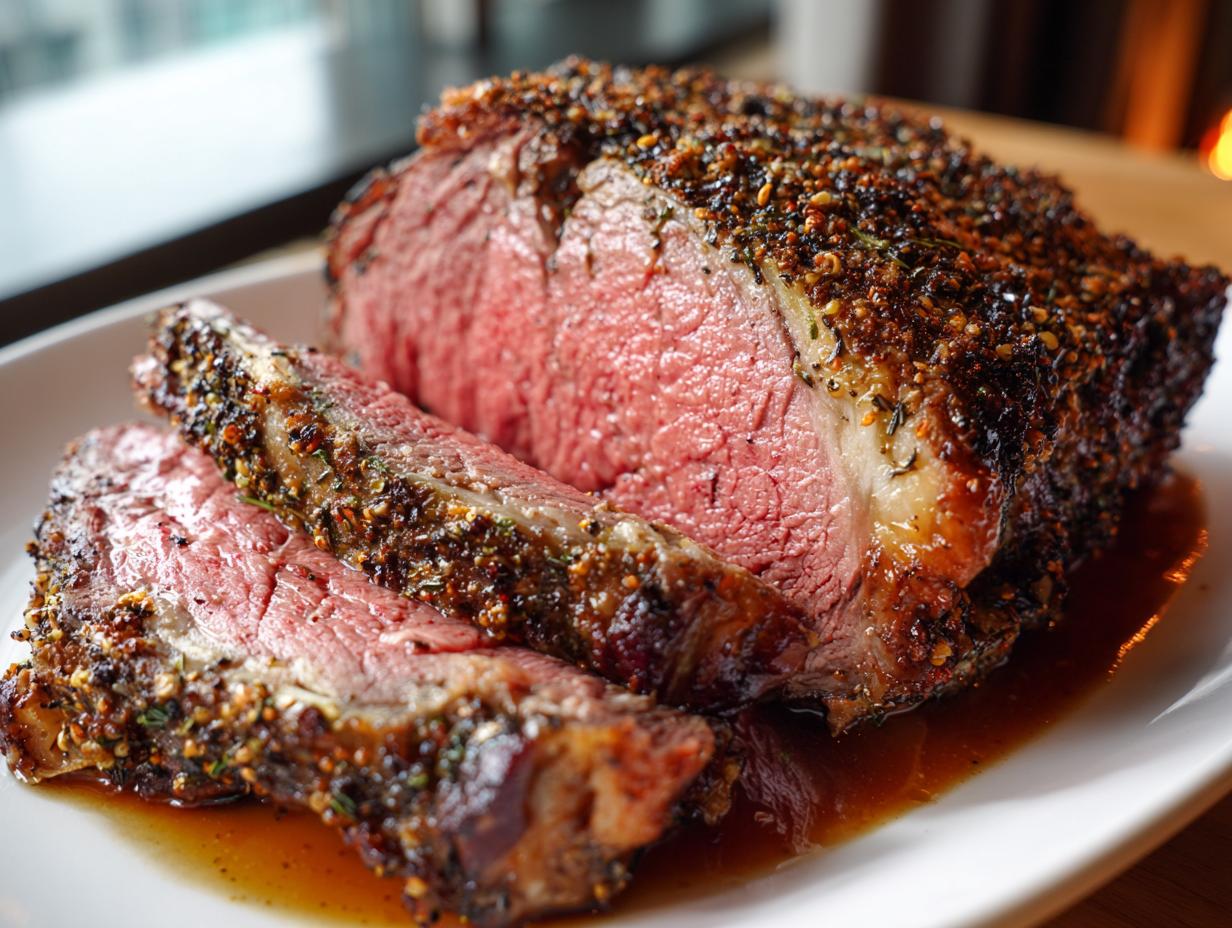

My kitchen usually screams comfort food—creamy sauces, crispy potatoes, things that can be made on a Tuesday night. But there’s one massive, glorious exception: the holidays, or any time I absolutely need to pull off something show-stopping. If you’re staring down a beautiful, intimidating cut of beef and wondering how on earth to make it perfect, you’ve come to the right place. Believe me, when I gave up spreadsheets for saucepans, learning to master the prime rib was my Mount Everest. This is Leo Maxwell, and I promise you, this oven-roasted technique is foolproof. Forget dry edges; we’re going for that unbelievably juicy, medium-rare center every single time.
- Why This Is the Best Prime Rib Recipe for Your Holiday Roast Beef Recipe
- The Essential Ingredients for Garlic Herb Crusted Prime Rib
- Oven Roasted Prime Rib Guide: Step-by-Step Instructions
- Simple Prime Rib Au Jus Instructions
- Tips for Success When Making a Standing Rib Roast Recipe
- Serving Suggestions for Your Easy Prime Rib Dinner
- Storage and Reheating Instructions for Leftover Roast Beef
- Frequently Asked Questions About Cooking Prime Rib
- Understanding the Nutrition for This Special Occasion Beef Roast
Why This Is the Best Prime Rib Recipe for Your Holiday Roast Beef Recipe
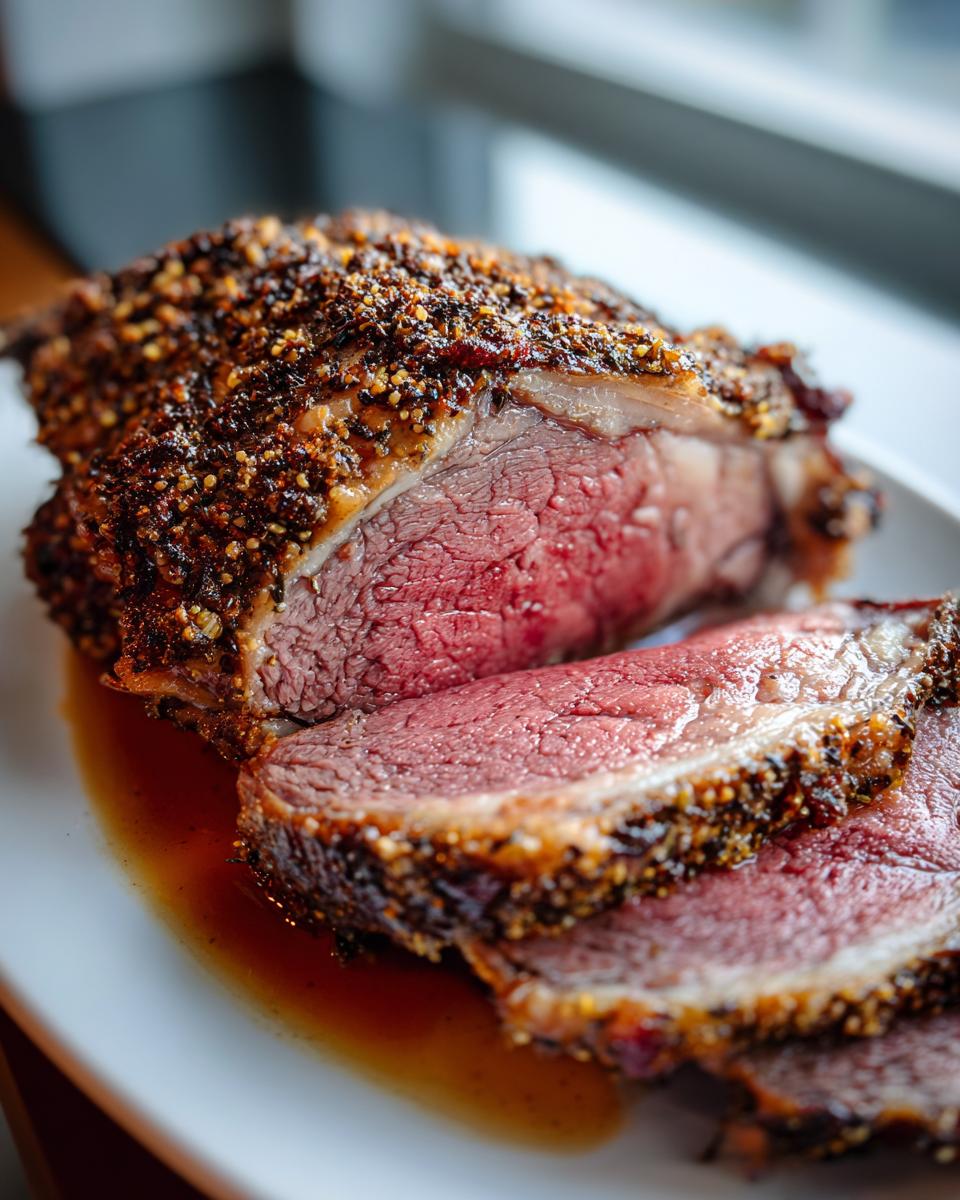
I tried every fancy trick in the book when I first started tackling massive beef roasts, but nothing gave me that consistent, show-stopping result like this two-stage heating method. This isn’t just my favorite Holiday Roast Beef Recipe; it’s based on tried-and-true culinary science that guarantees you a wonderfully **Juicy Medium Rare Prime Rib**. We hit that meat with blast furnace heat—450°F—for just 15 minutes. That initial shock evaporates surface moisture and locks in all those incredible herbs we slathered on, giving us that beautiful, crispy golden exterior.
Then, honestly, we basically let the oven take a slow, gentle nap at 325°F. This slow roast keeps the interior from creeping up in temperature too fast. It’s the secret sauce to nailing the **Perfect Prime Rib Temperature** without ending up with gray bands of overcooked beef around the edges. That contrast between the crust and the perfectly rosy interior is what makes this the **Best Prime Rib Recipe** out there.
Achieving Tender Prime Rib Roast Results Every Time
Listen, the single biggest error people make with any large roast is throwing it straight from the fridge into the hot oven. Don’t do it! If the center is ice cold, the outside will already be overcooked by the time the center warms up enough. That’s the enemy of a **Tender Prime Rib Roast**.
My rule for this **Foolproof Prime Rib Method** is simple: take that beef out of the cold at least three full hours before you plan to cook it. It needs to relax and take the chill off. This tempering process ensures the heat penetrates evenly, which gives us that glorious, edge-to-edge medium-rare you see in all the magazines. Trust me; this one simple step separates the home cooks from the real kitchen heroes!
The Essential Ingredients for Garlic Herb Crusted Prime Rib
Okay, let’s talk about what goes onto this masterpiece. You need quality ingredients because, frankly, a cut this good doesn’t need much help—it just needs the right spotlight! We are using a simple, powerful rub that sticks beautifully thanks to a Dijon glaze. Everything needs to be measured well here; we are not winging it when it comes to a **Special Occasion Beef Roast** like this.
For the roast itself, I’ve listed 3 tablespoons of coarse kosher salt, freshly ground black pepper, dried thyme, and dried rosemary. Don’t skimp on the garlic; we need six beautiful cloves, minced fine. The Dijon mustard and olive oil form the sticky base for our crust. And for the Au Jus? Just simple beef broth and a cornstarch slurry to thicken.
Ingredient Notes and Substitutions for Your Prime Rib
The roast itself is the star. I always push for bone-in for my **Standing Rib Roast Recipe**; those bones protect the meat underneath and add fantastic flavor. If you buy a bone-in roast, just be prepared that your **Bone In Prime Rib Cooking Times** will be slightly longer than the guide suggests, because the bone shields the meat!
If you can only find boneless, that’s fine, but remember that boneless roasts cook faster and tend to be a bit more prone to overcooking on the ends. Always, always, always buy the highest quality beef you can possibly afford here. This dish deserves it, and since it’s a simple preparation, the beef flavor really shines through!
Oven Roasted Prime Rib Guide: Step-by-Step Instructions
Now we get down to the real artistry! Look, I know reading instructions for something this expensive sometimes makes me sweat, but I promise this flow is so intuitive. We aren’t messing around with smokers or sous-vide here; this is getting done right in your regular oven, the way most folks want to tackle their showpiece roast. We’re going to build flavor first, then let the temperature control work its magic to deliver that perfectly cooked slab of beef you’ve been dreaming about. Check out my tips for my favorite roasted chicken over at Gourmet Gaze while you’re prepping!
Preparing the Roast and Herb Rub for Prime Rib
First things first: temperature control. Step 1 is letting that beautiful roast sit out for three hours—it needs to warm up! While it’s doing that, make sure you pat it absolutely bone-dry with paper towels. If it’s wet, you get steam, and we want a crust, not steamed beef!
Once dry, mix up your herb rub described in the ingredients list. Then, take your Dijon and oil mixture and paint it all over that roast like you’re glazing a canvas. Next, take that crumbly herb mix and press it hard onto all sides. We want full coverage! It should look rustic and absolutely delicious right before it even hits the heat.
The Critical Temperature Checks for Juicy Medium Rare Prime Rib
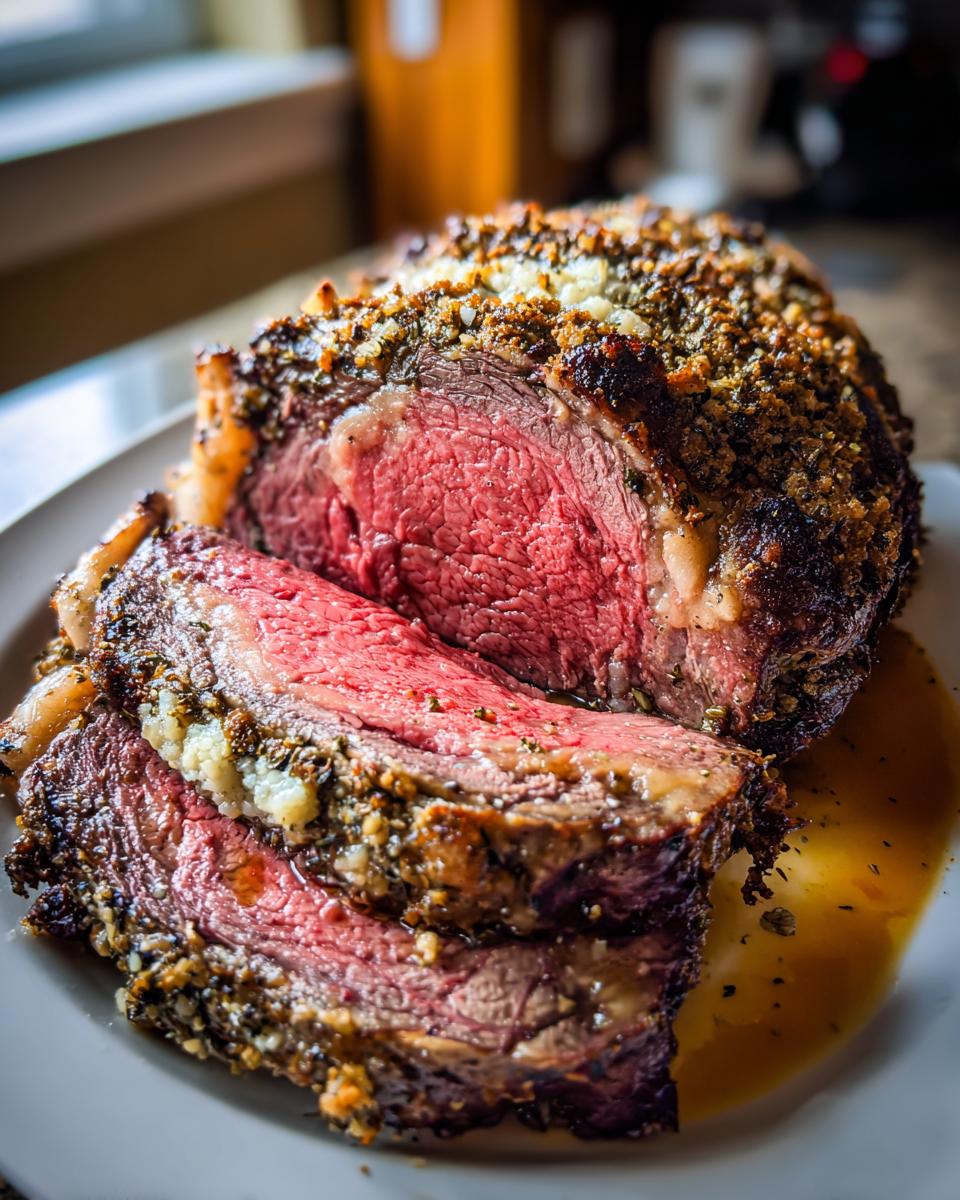
Time for the oven! Preheat it hot—450°F—and put the roast fat-side up on the rack. We blast it for 15 minutes, like I mentioned before, to set that crust. After that, immediately drop the temperature down to 325°F. This is where patience comes in, my friend.
You absolutely need a reliable meat thermometer for this step; estimating here is how you end up with dry roast beef. Stick that probe right into the thickest part, taking care not to touch the bone. When the thermometer reads exactly 125°F, pull that thing out. That slight under-pull is the key to hitting that sweet spot for **Juicy Medium Rare Prime Rib** after it rests.
The Essential Resting Period for Your Roast
This step feels medieval, but I promise you, it’s crucial. Once that roast hits 125°F, it needs to be tented loosely with foil and left alone for a minimum of 20 minutes. I usually aim closer to 25 or 30 if the roast is huge.
See, while it’s resting, all those internal juices, which were running toward the center due to the heat, redistribute back out through the muscle fibers. If you slice it immediately, those precious juices—the flavor, the moisture—all run out onto your cutting board, leaving your meat looking sad and dry. Resting ensures you get that melt-in-your-mouth experience that defines a perfect roast. It’s non-negotiable!
Simple Prime Rib Au Jus Instructions
I know, I know, you’ve cooked the massive roast, and now you think you have to wrestle with complicated gravy. Nope! That’s the beauty of a true Au Jus—it’s just concentrating the incredible flavor already sitting at the bottom of your roasting pan. This part is quick, so pay attention as soon as the roast comes out.
First, carefully pour all those amazing fond drippings into a saucepan. Be sure to leave behind the thick, solidified chunks of fat sitting in the bottom of the pan; we just want the liquid gold underneath. Add in your cup of beef broth. I find that using flavorful broth really punches up the final results, which you can learn more about when I share my recipe for creamy lemon pasta because using good broth makes all the difference!
Bring that mixture up to a gentle simmer over medium heat. Now, whisk in your cornstarch slurry—that’s the cornstarch mixed with cold water—a little bit at a time. Keep whisking until it just starts to thicken up, coating the back of a spoon. Please, watch it closely! If you leave it too long, you’ll end up with beef jelly instead of a light sauce. This thinner sauce is exactly what you want alongside your perfectly roasted meat, as my friends over at Ketocook Journal teach us too.
Tips for Success When Making a Standing Rib Roast Recipe
Even with a foolproof method like ours, a roast this size deserves a little extra attention to detail. These tips come from trial and error, and I’m sharing them so your success rate stays at 100%! Remember, when you’re planning a big meal, like my famous Chicken Piccata, you need reliability in the main event.
First, if you went for that beautiful bone-in cut—which I highly recommend—just remember those bones act like little insulators around the meat. That means you might need to tack on an extra 10 to 15 minutes of cooking time compared to a boneless roast of the exact same weight. Always trust that thermometer over the clock!
Also, I mentioned that crispier crust as an optional flourish. If you’re serving this stunning **Standing Rib Roast Recipe** immediately and want an extra crunch, after the required 20-minute rest, you can pop it under the broiler for just 2 or 3 minutes. Watch it like a hawk, though, because that crust can go from perfect to burnt in about thirty seconds flat! My friends over at Sweet and Savory agree that aggressive monitoring is needed for that final blast.
Serving Suggestions for Your Easy Prime Rib Dinner
You’ve pulled the roast, you’ve rested the roast, and now—the presentation! This magnificent beef deserves equally impressive sides. Since the main event is so rich, I always aim for sides that offer textural contrast or a nice, bright counterpoint. My go-to is always something creamy, like these incredible Creamy Colcannon Potatoes; they soak up that Au Jus perfectly!
For vegetables, skip anything watery. We want texture! I love finishing the meal with something green and slightly sharp, such as my recipe for Parmesan Roasted Broccoli. The sharpness of the cheese cuts through the fattiness of the beef beautifully.
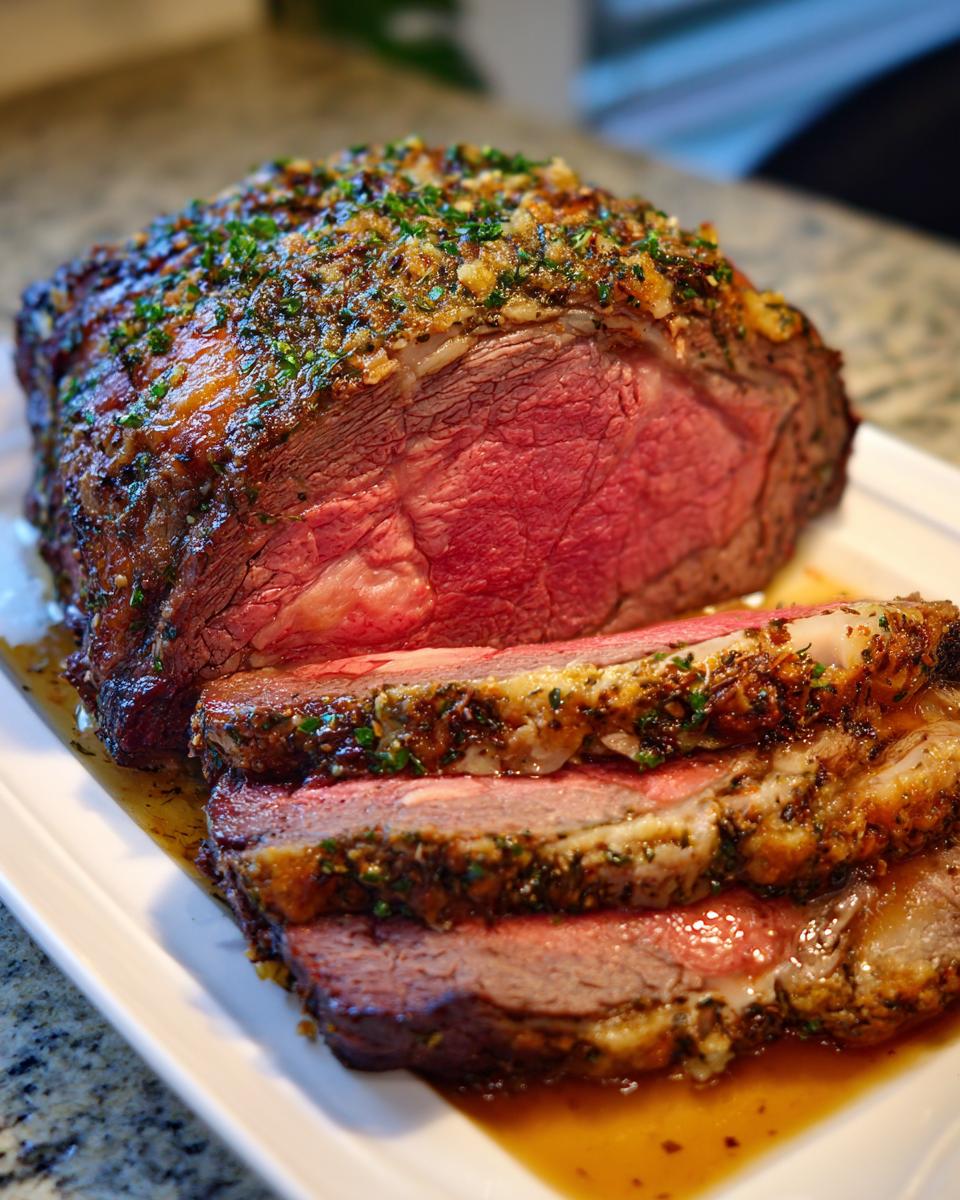
Before you set everything out, remember the final step for serving your **Easy Prime Rib Dinner**: slicing. You must always slice against the grain. Look closely at the meat; you’ll see long lines running through it. Slice perpendicular (criss-cross) to those lines. This shortens the muscle fibers, making every single bite unbelievably tender!
Storage and Reheating Instructions for Leftover Roast Beef
If you somehow manage to have any leftovers—which, let’s be honest, is a minor miracle when you cook a prime rib—you need to treat that gorgeous meat right. Don’t just let it sit in that plastic tub in the fridge! For the best results, you’ve got to slice whatever remains thinly and immediately place those slices into an airtight container. It should keep beautifully for three to four days in the refrigerator.
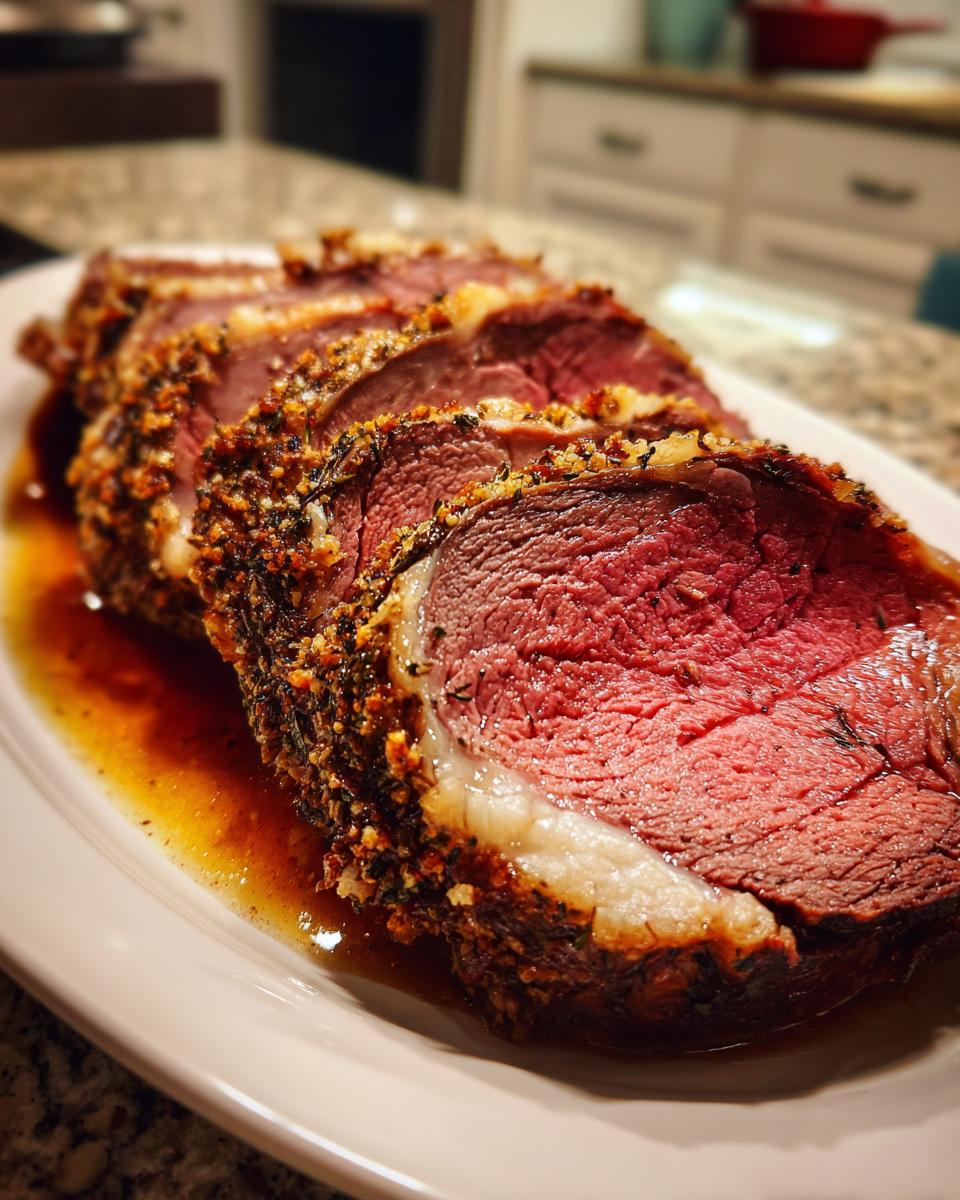
When it comes to reheating, please, for the love of tender beef, avoid the microwave! Microwaving will just turn your beautiful roast into shoe leather almost instantly. Instead, think low and slow. I take my leftover slices and lay them gently in a small baking dish. Add maybe a splash of water or, even better, some of that leftover Au Jus—you can find my recipe for Swiss Steak with Tomato Gravy, which shares great pan-dripping conversion tips, if you need inspiration on building flavor!
Cover that dish tightly with foil and pop it into a low oven, maybe 300°F, just until the meat is warmed through. The steam trapped under the foil and the moisture from the liquid keep the beef tender and juicy, tasting almost as good as the first night. It’s the only civilized way to enjoy the leftovers!
Frequently Asked Questions About Cooking Prime Rib
I get tons of emails after the holidays asking about last-minute adjustments or temperature fixes, so I wanted to put the most common worries right here! Cooking a big roast like this should feel exciting, not stressful. If you have tried everything and still need a quick answer, you can always reach out to me via my contact page!
What is the Perfect Prime Rib Temperature for Medium-Rare?
This is the question I get asked the most, and it’s the secret weapon for avoiding gray edges! For this recipe, the absolute perfect moment to pull your **Prime Rib** roast out of the oven is when your meat thermometer hits 125°F. That’s not the final temperature, though!
Remember that crucial resting time we talked about? During that 20-30 minute rest under the foil, the heat continues to move inward, a process called carryover cooking. That 125°F pull will climb up naturally to about 130°F to 135°F. That range gives you that stunning, perfectly rosy, **Juicy Medium Rare Prime Rib** every time. If you wait until it hits 135°F in the oven, you’ll end up closer to medium, so trust the thermometer and trust the rest!
Can I use a boneless roast instead of a bone-in roast for this recipe?
Yes, you absolutely can! Most home cooks often find boneless roasts easier to handle, and the crust gets beautifully flavored on all sides. However, this means you need to adjust your **Bone In Prime Rib Cooking Times** guidance. Since the bone acts as a little shield protecting the meat closest to it, removing the bone means the entire roast heats up more uniformly and slightly faster.
My advice is to assume it will cook about 10 to 15 minutes faster per pound than the chart suggests for a bone-in cut. And crucially, you still need to use that meat thermometer! Start checking your temperature about 15 minutes before you expect it to be done, regardless of what the clock says. You can see great advice on oven methods over at Pure Savory, too, if you need another expert take on timing!
Understanding the Nutrition for This Special Occasion Beef Roast
Look, I won’t pretend this is a light Tuesday night salad. This is a showstopper, a glorious indulgence for your **Special Occasion Beef Roast**! Because the cut of beef matters immensely, these numbers are just ballpark estimations based on a standard 6-ounce cooked portion.
- Calories: 450
- Protein: 40g
- Fat: 30g (12g Saturated)
- Sodium: 450mg
- Carbohydrates: 1g
Please keep in mind that these figures are just estimates! If you trim more fat off your roast, the fat content will drop. If you use a saltier broth for the Au Jus, your sodium will creep up. It’s all part of cooking with incredible ingredients—nothing is exactly the same twice!
PrintFoolproof Garlic Herb Crusted Prime Rib Recipe (Oven Roasted for Medium-Rare Perfection)
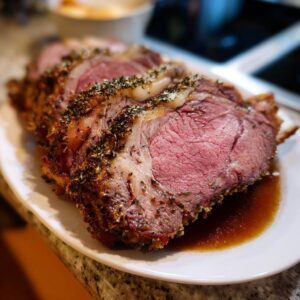
Learn the best way to cook a prime rib roast using a simple oven method. This recipe delivers a juicy, tender roast with a flavorful garlic herb crust, perfect for your next special occasion dinner.
- Prep Time: 20 min
- Cook Time: 150 min
- Total Time: 170 min
- Yield: 6 servings 1x
- Category: Main Course
- Method: Oven Roasting
- Cuisine: American
- Diet: Low Fat
Ingredients
- 1 (5-7 pound) bone-in prime rib roast (standing rib roast)
- 3 tablespoons coarse kosher salt
- 2 tablespoons freshly ground black pepper
- 1 tablespoon dried thyme
- 1 tablespoon dried rosemary
- 6 cloves garlic, minced
- 1/4 cup olive oil
- 1/4 cup Dijon mustard
- 1 cup beef broth (for Au Jus)
- 1 tablespoon cornstarch mixed with 2 tablespoons cold water (for Au Jus slurry)
Instructions
- Remove the prime rib roast from the refrigerator 3 hours before cooking to allow it to come closer to room temperature. Pat the roast completely dry with paper towels.
- Preheat your oven to 450 degrees Fahrenheit.
- In a small bowl, combine the minced garlic, kosher salt, black pepper, thyme, and rosemary. Mix well to form a coarse rub.
- In a separate small bowl, whisk together the olive oil and Dijon mustard. Brush this mixture evenly over the entire surface of the prime rib roast.
- Generously press the garlic herb rub onto all sides of the roast, ensuring good coverage.
- Place the roast, fat side up, in a roasting pan fitted with a rack.
- Roast at 450 degrees Fahrenheit for 15 minutes. This high heat helps create a good crust.
- Reduce the oven temperature to 325 degrees Fahrenheit. Continue roasting until the internal temperature reaches 125 degrees Fahrenheit for medium-rare. Use a meat thermometer inserted into the thickest part of the meat, avoiding the bone. This usually takes about 13-15 minutes per pound after the initial high-heat blast.
- Remove the roast from the oven when it reaches 125 degrees Fahrenheit. Tent it loosely with foil and let it rest for at least 20 minutes. The internal temperature will rise to about 130-135 degrees Fahrenheit (medium-rare) during resting.
- While the roast rests, prepare the Au Jus. Pour the pan drippings into a saucepan, leaving behind any large pieces of fat. Add the beef broth. Bring to a simmer over medium heat.
- Whisk the cornstarch slurry into the simmering liquid. Cook for 1-2 minutes until the Au Jus thickens slightly. Do not over-thicken.
- Slice the prime rib against the grain into thick portions. Serve immediately with the warm Au Jus on the side.
Notes
- For a bone-in roast, the bones act as insulation, which can slightly increase the cooking time compared to a boneless roast of the same weight.
- Always use a reliable meat thermometer to gauge doneness; visual checks are not precise for this cut.
- If you prefer a crispier crust, you can place the roast under the broiler for 2-3 minutes after resting, watching carefully to prevent burning.
Nutrition
- Serving Size: 6 oz cooked meat
- Calories: 450
- Sugar: 0
- Sodium: 450
- Fat: 30
- Saturated Fat: 12
- Unsaturated Fat: 18
- Trans Fat: 0
- Carbohydrates: 1
- Fiber: 0
- Protein: 40
- Cholesterol: 140