
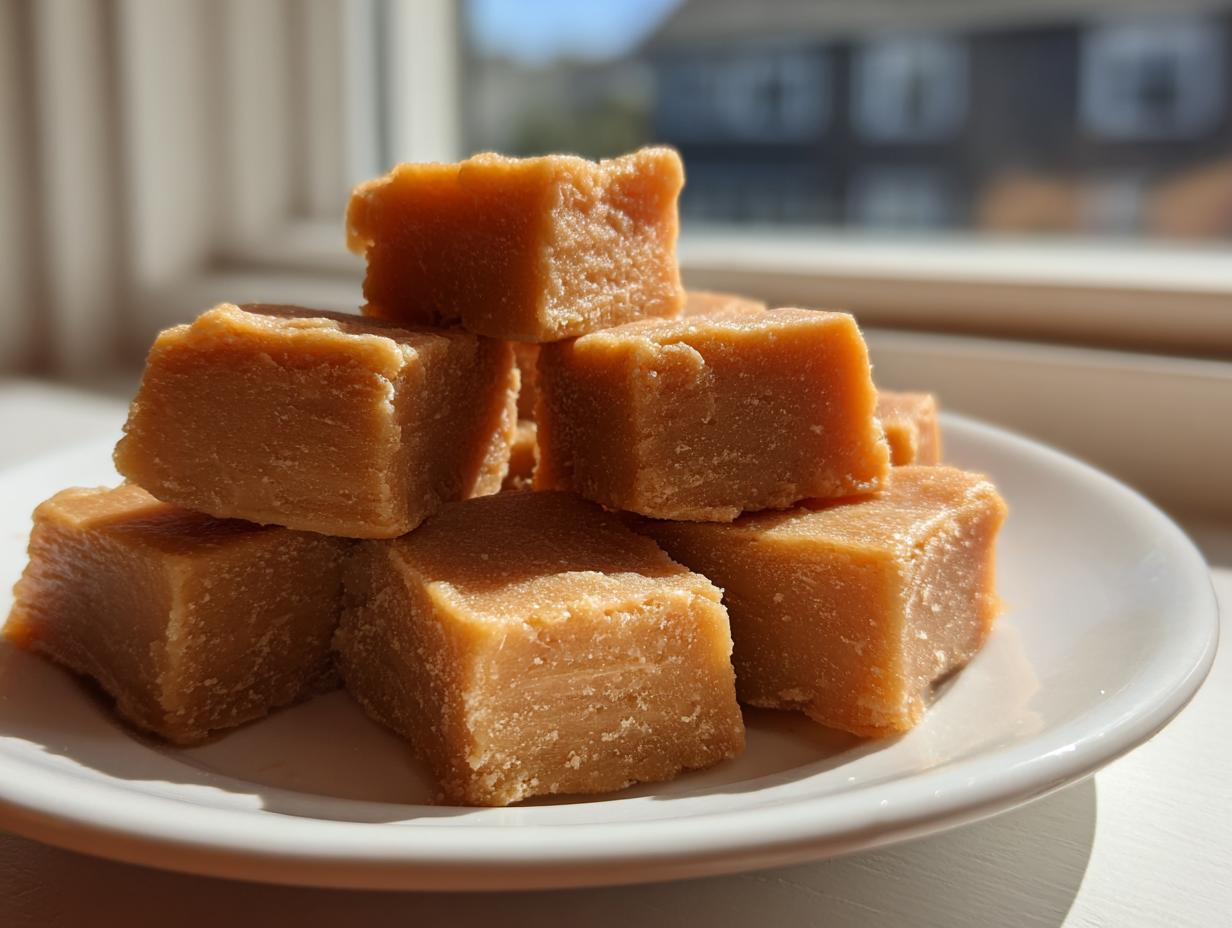

There are treats that remind you of childhood, and then there is Penuche. If the name doesn’t immediately spark recognition, let me tell you: this is the caramel-kissed, buttery confection that every lover of old fashioned candy needs in their repertoire. Forget chocolate for a minute; we are diving deep into the world of brown sugar fudge! This isn’t just another sweet square; it’s a culinary hug rendered in sugar and cream. After testing batch after batch here at Gourmet Gaze, I realized that achieving that signature, unbelievably creamy texture—the one that truly melts in your mouth—requires respect for tradition. This recipe for homemade Penuche is my perfected love letter to that deeply satisfying, nostalgic flavor. For more deeply comforting recipes like this, make sure to check out my full collection of desserts.
- What Makes This Penuche Fudge Different from Regular Fudge?
- Gathering Ingredients for Perfect Penuche Fudge
- The Science of Creamy Penuche Fudge: Step-by-Step Instructions
- Tips for Success When Making Old Fashioned Candy
- Serving Suggestions for Your Vanilla Fudge
- Storage and Keeping Penuche Fudge Fresh
- Frequently Asked Questions About Penuche Fudge Recipe
- Nutritional Estimates for This Classic Fudge Dessert
- Share Your Penuche Fudge Creations
What Makes This Penuche Fudge Different from Regular Fudge?
When people think of fudge, their minds immediately jump to rich, dark chocolate. And while I absolutely adore a good chocolate fudge, Penuche is in a league all its own. The key difference lies entirely in that beautiful base ingredient: brown sugar!
Think of Penuche as the sophisticated cousin of standard fudge. Since we skip the cocoa entirely, this is a wonderful no chocolate fudge recipe that highlights the deep, almost butterscotch notes inherent in molasses. It’s that natural caramel flavor locked inside the brown sugar that gives this old fashioned candy its signature warmth. Trusting this approach, based on classic candy-making knowledge, ensures you get authentic flavor every single time.
Gathering Ingredients for Perfect Penuche Fudge
With Penuche, the ingredient list is short, but every item must be respected. This recipe relies on purity to create that luxurious, buttery confection flavor we’re aiming for. You need quality here because there are so few places for weaker flavors to hide! Don’t even think about skipping the candy thermometer—that little tool is what separates a sticky mess from perfect, creamy fudge.
Here’s what you’ll need for this incredible brown sugar fudge:
- 2 cups granulated sugar
- 1 cup packed light brown sugar
- 1 cup heavy cream
- 2 tablespoons unsalted butter
- 1 teaspoon vanilla extract
- Pinch of salt
Ingredient Notes and Substitutions for Your Brown Sugar Fudge
Let’s talk quickly about the brown sugar choice. I used light brown sugar for a classic vanilla taste, but honestly, if you want to deepen that caramel flavor profile a bit more, absolutely go for dark brown sugar! Also, heavy cream is non-negotiable here. Milk just won’t provide the necessary fat content to reach that perfect soft-ball stage reliably.
The Science of Creamy Penuche Fudge: Step-by-Step Instructions
Alright, this is where the real magic, and the real science, happens for your penuche fudge. Making candy isn’t always about speed; it’s about hitting exact temperatures. Follow these steps precisely, and I promise you’ll end up with that legendary, smooth texture that makes this creamy fudge famous. Please trust me on the thermometer—it’s the key to avoiding grainy disaster!
Preparing the Pan and Dissolving Sugars
First thing’s first: prepare your vessel! Lightly grease your 8×8 inch pan, and then line it with parchment paper, leaving those nice little overhangs on two sides. These overhangs are your handles later when lifting this sweet confection out. Next, combine your sugars and heavy cream in a heavy-bottomed saucepan. You must stir this mixture consistently over medium heat until you can’t feel any sugar granules sticking to the bottom of the pot. Once it starts to lightly bubble, STOP STIRRING! Stirring after the boil starts encourages crystals to form, and we want smooth sailing here.
Reaching the Soft-Ball Stage for Your Penuche Fudge Recipe
Now we bring in the candy thermometer. Clip it securely to the side of the pan, making sure the tip kisses the liquid but isn’t resting on the metal bottom. We are cooking this mixture, undisturbed, until it hits exactly 234°F (112°C). That temperature corresponds with the soft-ball stage, which means your sugar chemistry is perfect for that irresistible melt in your mouth dessert quality. Watch it closely—it climbs fast at the end!
The Crucial Cooling Period Before Beating
The instant it hits 234°F, yank that pan off the heat! Stir in your butter and the pinch of salt—that’s it for now. Now comes the hardest part, which shows my dedication to classic techniques: you have to wait. Let the entire mixture cool completely, undisturbed, until the temperature drops down to 110°F (43°C). If you start beating it when it’s too hot, you will get coarse, grainy crystals. Letting it cool guarantees those beautiful, microscopic crystals that result in true silkiness.
Beating and Setting Your Homemade Penuche
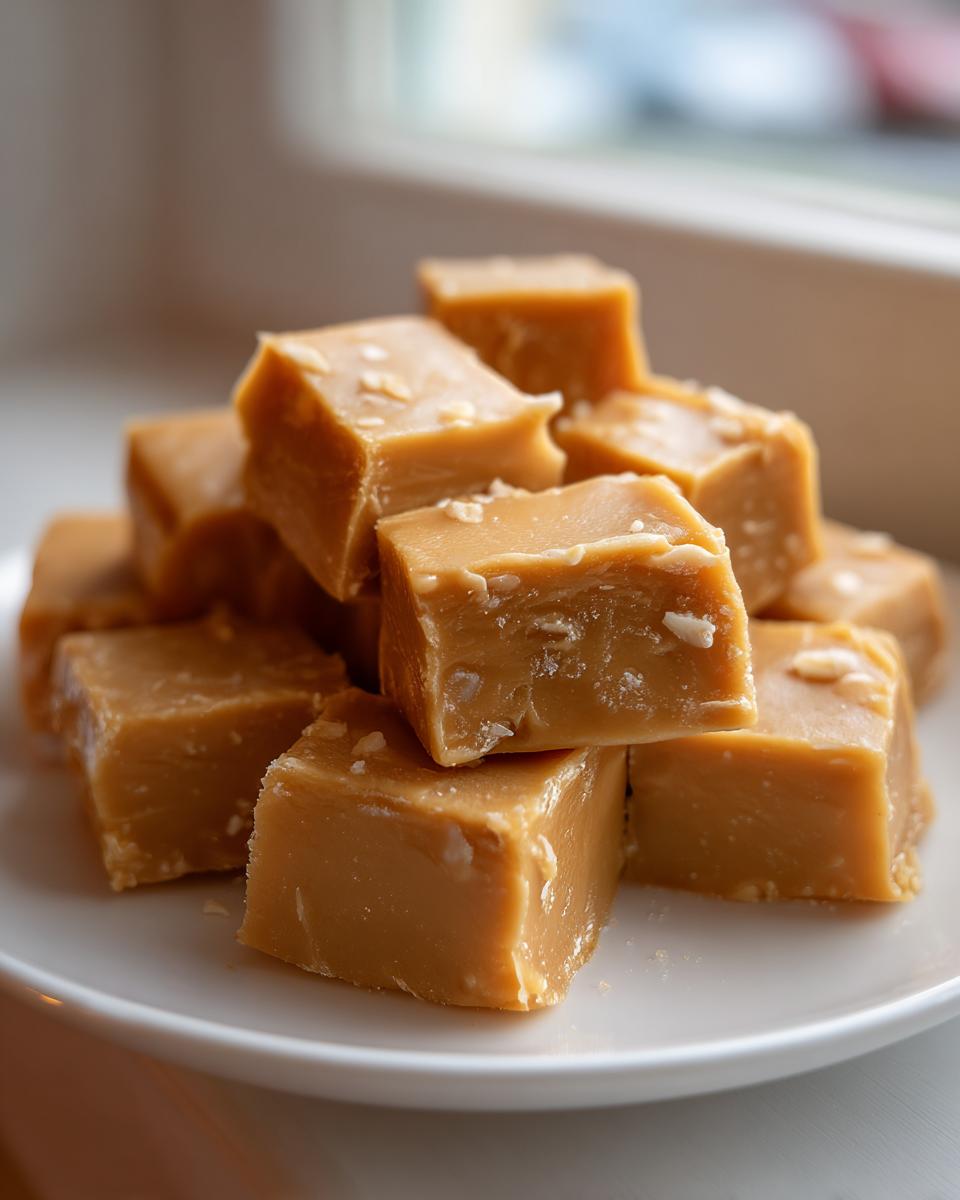
Once it cools to 110°F, drop in your vanilla extract. Now, you beat it! And I mean *vigorously*. Use a sturdy wooden spoon or spatula and work it until you see the fudge lose its shiny gloss and start looking thick, almost like super stiff frosting. This takes some muscle, maybe three or four minutes. Work fast, pour it right into your prepared pan, and seriously, do not scrape down the sides of the pan—that last bit often has the wrong consistency. Let it set up at room temperature for a few hours until it’s wonderfully firm. Just look at that homemade penuche!
Tips for Success When Making Old Fashioned Candy
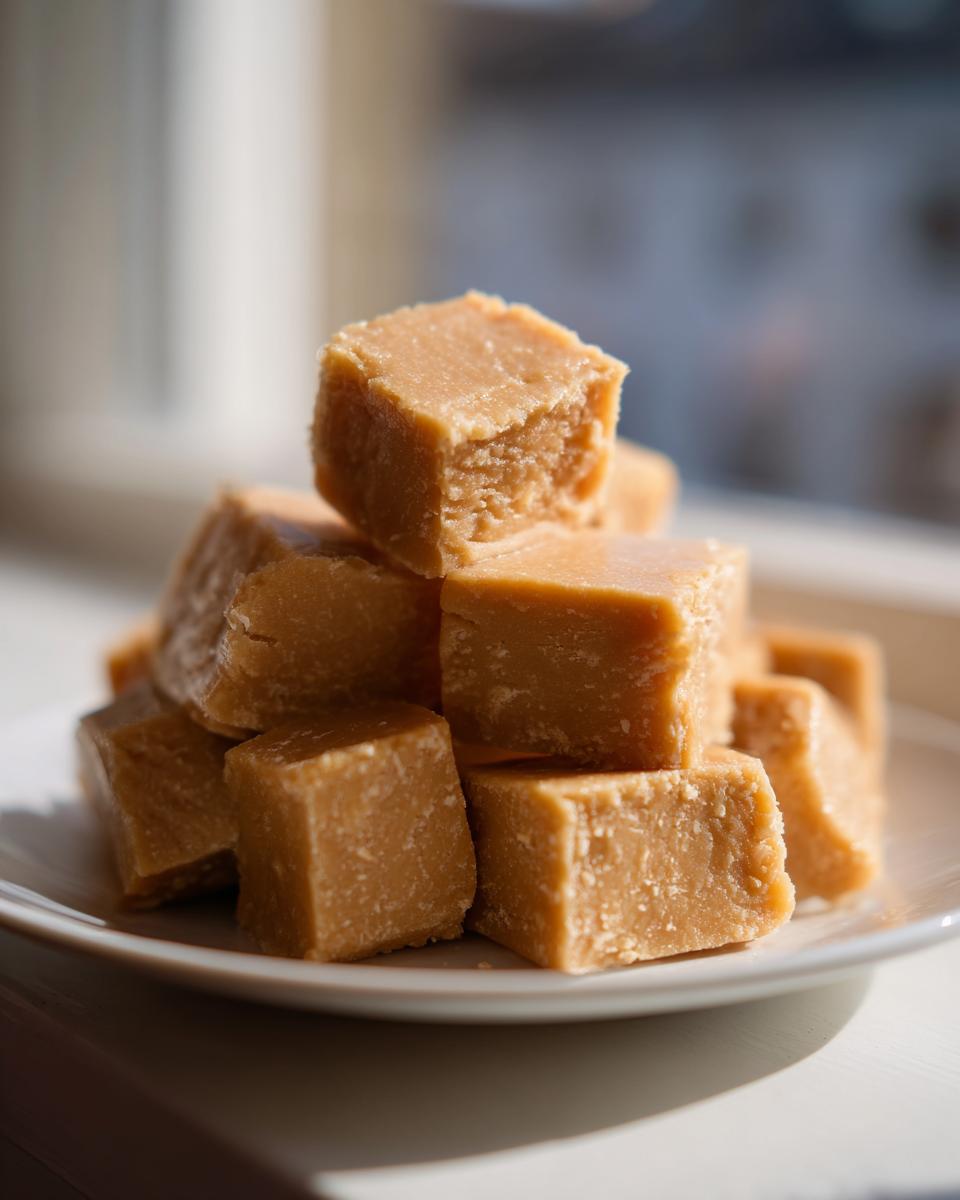
If you’ve managed to nail the temperature control so far, you’re basically a candy master! Achieving that perfect, non-grainy finish takes attention, but it’s so rewarding when you bite into that smooth, caramel flavored fudge.
My biggest tip for any old fashioned candy is to manage humidity. If it’s a rainy day, the sugar mixture absorbs moisture, making it harder to reach the correct temperature. Try to make this on a drier day if you can!
Also, remember that vigorous beating after cooling is what develops the final structure. That friction introduces just enough cooling action to create softness without forming large crystals. Don’t underbeat it, but stop the moment it stops looking glossy.
Lastly, once set, store these beauties in an airtight container at cool room temperature. They really shine when allowed to sit for about a day to fully marry those flavors. For more classic treats, browse my desserts collection!
Serving Suggestions for Your Vanilla Fudge
So, you have made the most luxurious, creamy vanilla fudge imaginable—now what? You absolutely cannot just eat it standing over the counter (though I’ve certainly been guilty of that!). This buttery confection deserves a proper presentation.
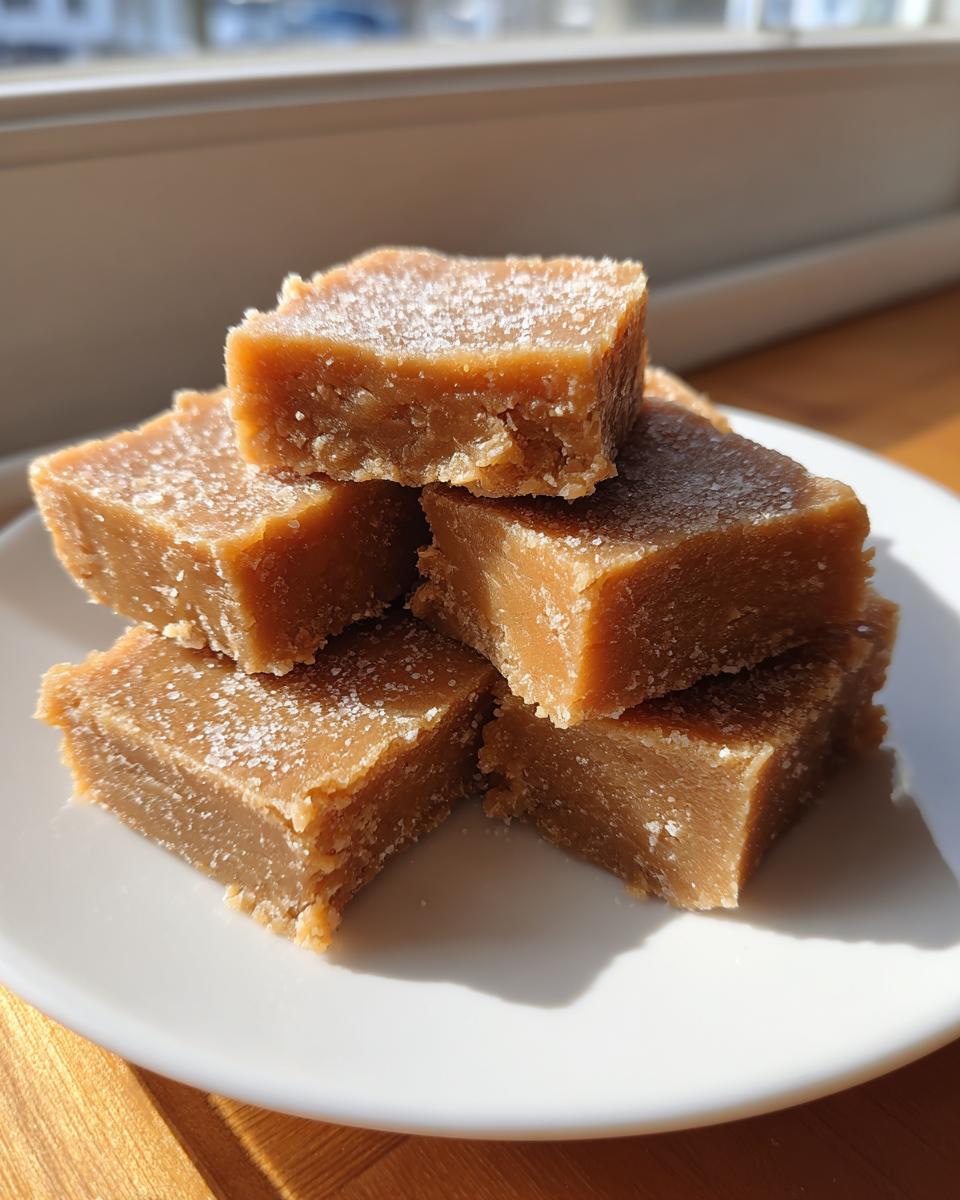
These squares are fantastic alongside a strong, hot cup of coffee; the slightly bitter notes balance the rich sweetness perfectly. For special occasions or holiday candy platters, I sometimes like to pair them with something tart, like my old-fashioned tea cakes, to offer contrast.
If you want to dress them up just a touch, a light dusting of high-quality cocoa powder or even some toasted, finely chopped pecans on top looks elegant, highlighting that sweet caramel flavor beautifully.
Storage and Keeping Penuche Fudge Fresh
Now that your homemade penuche is set and perfect, you need to protect it! The best place for these squares is actually at cool room temperature, layered between pieces of parchment paper inside a truly airtight container. They stay wonderfully fresh this way for about a week, developing even more flavor as they sit.
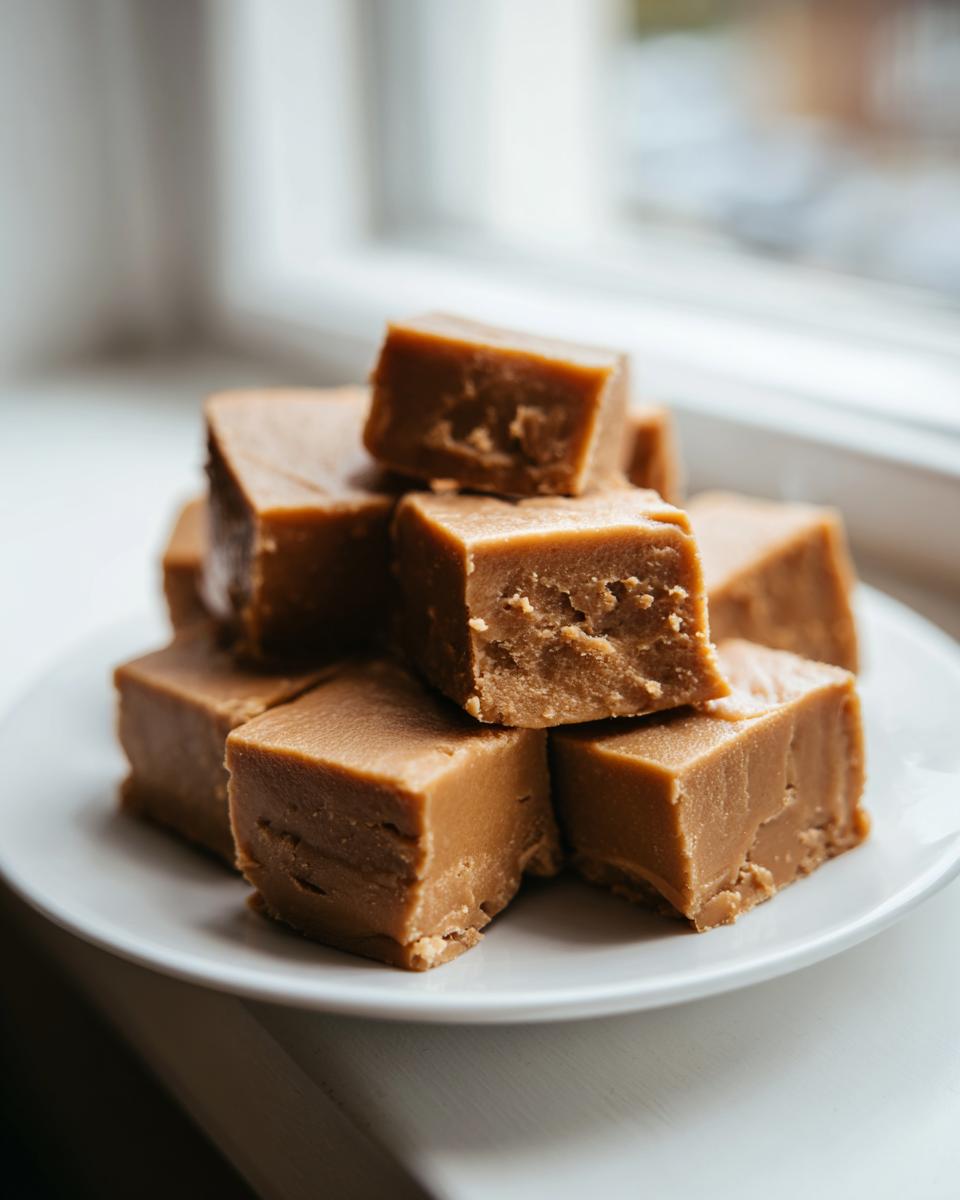
If you need them to last longer, say for holiday candy gifting in advance, pop them into the refrigerator. Chilling helps them stay firm, though they might get a *tiny* bit stiffer. If you do refrigerate, take them out about 30 minutes before serving so they get that perfect soft, melt-in-your-mouth texture back. No need to reheat these beauties!
Frequently Asked Questions About Penuche Fudge Recipe
My Penuche Fudge turned out grainy! What did I do wrong?
Oh, that’s the worst feeling! Graininess almost always comes down to beating the mixture before it cooled down enough. Remember that crucial step where we wait for the mixture to hit 110°F? If you start beating while it’s too hot, the sugar crystals grow massive and you end up with gritty fudge instead of a smooth texture. You must let it cool undisturbed first!
Can I substitute evaporated milk or regular milk for the heavy cream?
I strongly advise against it if you want this genuine penuche fudge texture. Heavy cream has a high fat content necessary to absorb the heat correctly and form the right soft-ball stage without crystallizing too easily. Evaporated milk sometimes works in a pinch, but regular milk has too much water, and you risk ending up with runny candy. Stick to the heavy cream for your old fashioned brown sugar fudge.
Can I add nuts or chocolate chips to this vanilla fudge?
Absolutely! This is your confection, after all. If you want to add nuts—walnuts or pecans are classic pairings with that caramel flavor—stir them in right after you add the vanilla, just before you start beating. If you decide to add chocolate chips, remember two things: first, they are a bit heavy, so don’t add too many, and second, stir them in right at the very end, just enough to incorporate.
What temperature should I remove this from the heat?
You need to pull it off the heat the moment the candy thermometer reads exactly 234°F (112°C). This is your soft-ball stage. If you go much past that, you’ll end up with a harder, almost taffy-like consistency, which ruins that dreamy, melt-in-your-mouth experience we’re aiming for here.
Nutritional Estimates for This Classic Fudge Dessert
Now, I know most of us aren’t reaching for Penuche because we’re counting macros—it’s a celebration treat! But for those who appreciate knowing what’s in their slice of heaven, here are the general estimates we drew up based on the recipe yielding 36 squares.
Please remember, these are estimates based on the standard ingredients listed above. If you use a richer cream or different brands of sugar, your final count will shift just a little. We believe in transparency here at Gourmet Gaze, even with our favorite indulgences!
- Serving Size: 1 square
- Calories: 140
- Sugar: 25g
- Fat: 4g
- Protein: 1g
- Carbohydrates: 26g
Enjoy these sweet moments responsibly!
Share Your Penuche Fudge Creations
I have shared every secret I know—from respecting the brown sugar base to nailing that critical 110°F cooling point—but now it’s your turn to bring this classic confection to life!
The joy of sharing food isn’t complete until I see your results. Did you achieve that perfect, melt-in-your-mouth texture? Did you manage to keep your fudge perfectly smooth? I truly want to hear all about it!
Please leave a rating for this Penuche Fudge Recipe right here below. Your feedback helps other home cooks feel confident taking on this beautiful old-fashioned candy. If you snap a photo of those lovely squares, tag us on social media! Seeing your delicious creations is exactly what makes this work so rewarding.
If you’re inspired to explore other wonderful treats that bring comfort and joy to the table, head back over to browse my complete desserts index. Happy cooking, everyone!
PrintOld-Fashioned Penuche Fudge: Creamy Brown Sugar Candy Recipe
Learn the secret to unbelievably creamy homemade Penuche Fudge. This old-fashioned candy uses rich brown sugar and butter for a sweet, melt-in-your-mouth vanilla flavor, perfect for gifting.
- Prep Time: 15 min
- Cook Time: 15 min
- Total Time: 4 hours
- Yield: 36 squares 1x
- Category: Dessert
- Method: Stovetop Cooking
- Cuisine: American
- Diet: Vegetarian
Ingredients
- 2 cups granulated sugar
- 1 cup packed light brown sugar
- 1 cup heavy cream
- 2 tablespoons unsalted butter
- 1 teaspoon vanilla extract
- Pinch of salt
Instructions
- Lightly grease an 8×8 inch baking pan and line it with parchment paper, leaving an overhang for easy removal.
- Combine the granulated sugar, brown sugar, and heavy cream in a heavy-bottomed saucepan.
- Stir the mixture over medium heat until the sugars dissolve completely. Stop stirring once the mixture boils.
- Insert a candy thermometer into the side of the pan, making sure it does not touch the bottom.
- Cook the mixture without stirring until it reaches exactly 234°F (112°C) on the candy thermometer. This is the soft-ball stage.
- Remove the pan from the heat immediately. Add the butter and salt. Do not stir yet.
- Let the mixture cool undisturbed until it reaches 110°F (43°C). This cooling step is crucial for creamy texture.
- Once cooled to 110°F, add the vanilla extract.
- Begin beating the mixture vigorously with a wooden spoon or a sturdy spatula. Continue beating until the fudge loses its glossy shine and begins to thicken and set, resembling thick frosting. This takes several minutes.
- Quickly pour the thickened fudge into the prepared pan. Do not scrape the sides of the pan.
- Allow the Penuche fudge to set completely at room temperature for several hours, or chill briefly to speed up setting.
- Once firm, lift the fudge out using the parchment paper overhang, cut into squares, and serve your classic brown sugar fudge.
Notes
- For the smoothest texture, cool the mixture to 110°F before beating. Beating too early results in grainy fudge.
- Use high-quality butter for the best buttery confection flavor.
- If you prefer a slightly deeper caramel flavor, use dark brown sugar instead of light brown sugar.
Nutrition
- Serving Size: 1 square
- Calories: 140
- Sugar: 25g
- Sodium: 25mg
- Fat: 4g
- Saturated Fat: 2.5g
- Unsaturated Fat: 1.5g
- Trans Fat: 0g
- Carbohydrates: 26g
- Fiber: 0g
- Protein: 1g
- Cholesterol: 15mg