
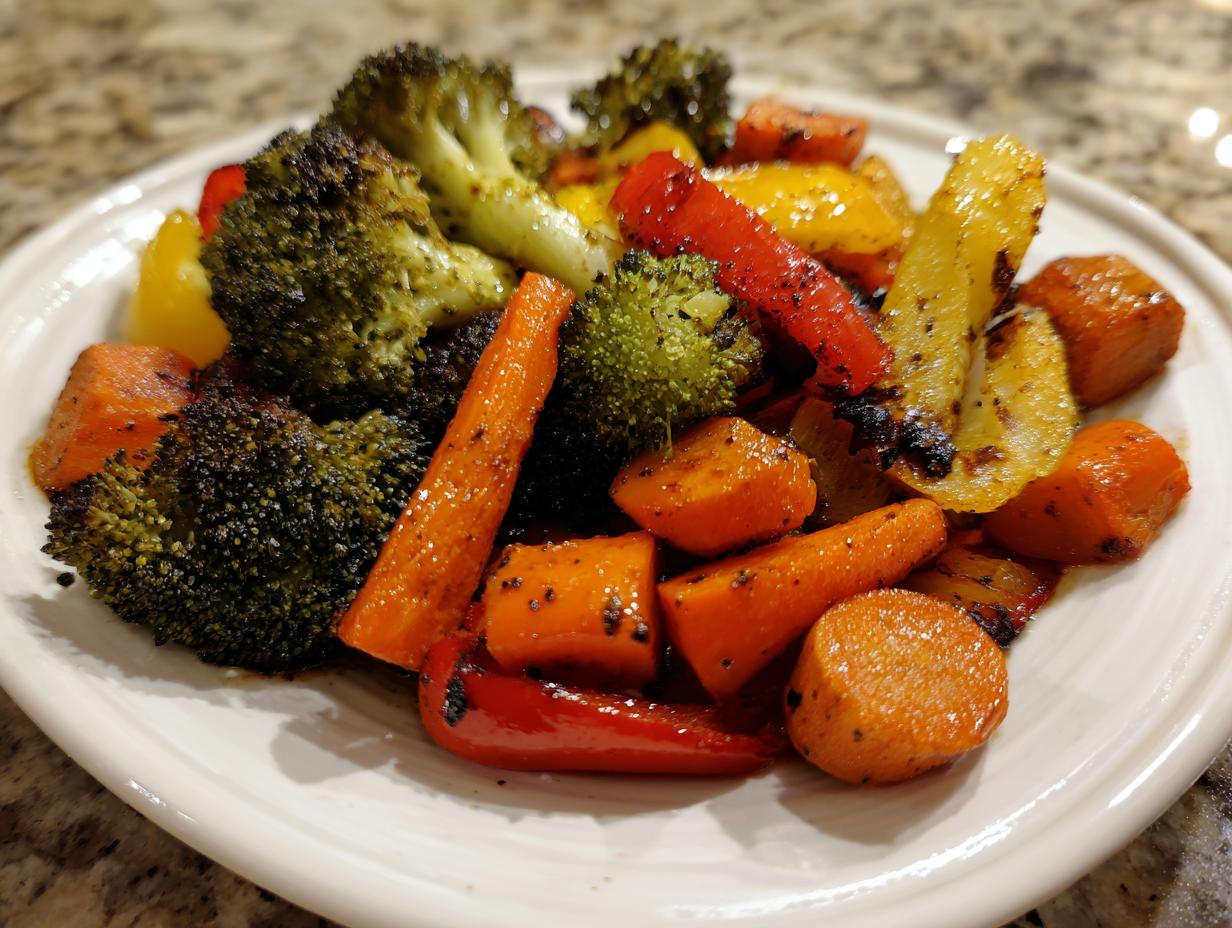

There is nothing sadder in the culinary world than pulling a pan of beautiful, promising vegetables from the oven only to discover they’ve turned into a pile of sad, lukewarm mush. I know the feeling well. For years, when I was deep in my corporate marketing director days, vegetables were just something I dumped on a sheet and prayed for the best. They almost always steamed, never crisped, and certainly never caramelized.
But that changed when I realized cooking wasn’t a chore; it was the story I was missing. After chasing a transformative dish in New Orleans, I committed myself to understanding food, and my number one focus became mastering the technique for truly stunning roasted vegetables. Forget those soft, bland pillows you’re used to. This guide isn’t just a recipe; it’s the definitive playbook for achieving that perfect, slightly charred, deeply sweet exterior and an interior that’s cooked just right. Trust me, once you master this, you’ll never go back. You can check out a bit more about my journey away from spreadsheets and into the kitchen over on my About page if you’re curious!
- Why You Will Master These Roasted Vegetables
- Essential Ingredients for Flavorful Roasted Vegetables Seasonings
- The Perfect Roasted Vegetables Technique: Step-by-Step Guide
- Customizing Your Garlic Roasted Vegetables Recipe
- Tips for Success with Oven Roasted Vegetables
- Serving Suggestions for Roasted Vegetable for Dinner
- Storage and Reheating Instructions for Roasted Vegetables
- Frequently Asked Questions About Roasting Vegetables
- Share Your Perfect Roasted Vegetables Creations
Why You Will Master These Roasted Vegetables
I promise you, making remarkable **roasted vegetables** isn’t about luck; it’s about following a few crucial, almost stubborn rules. Since swapping my marketing career for testing recipes in my home kitchen—which you can read more about on my blog—I’ve nailed down the science behind the magic. You’re going to conquer this because these instructions are designed for real life.
Achieving Caramelized Roasted Vegetables Texture
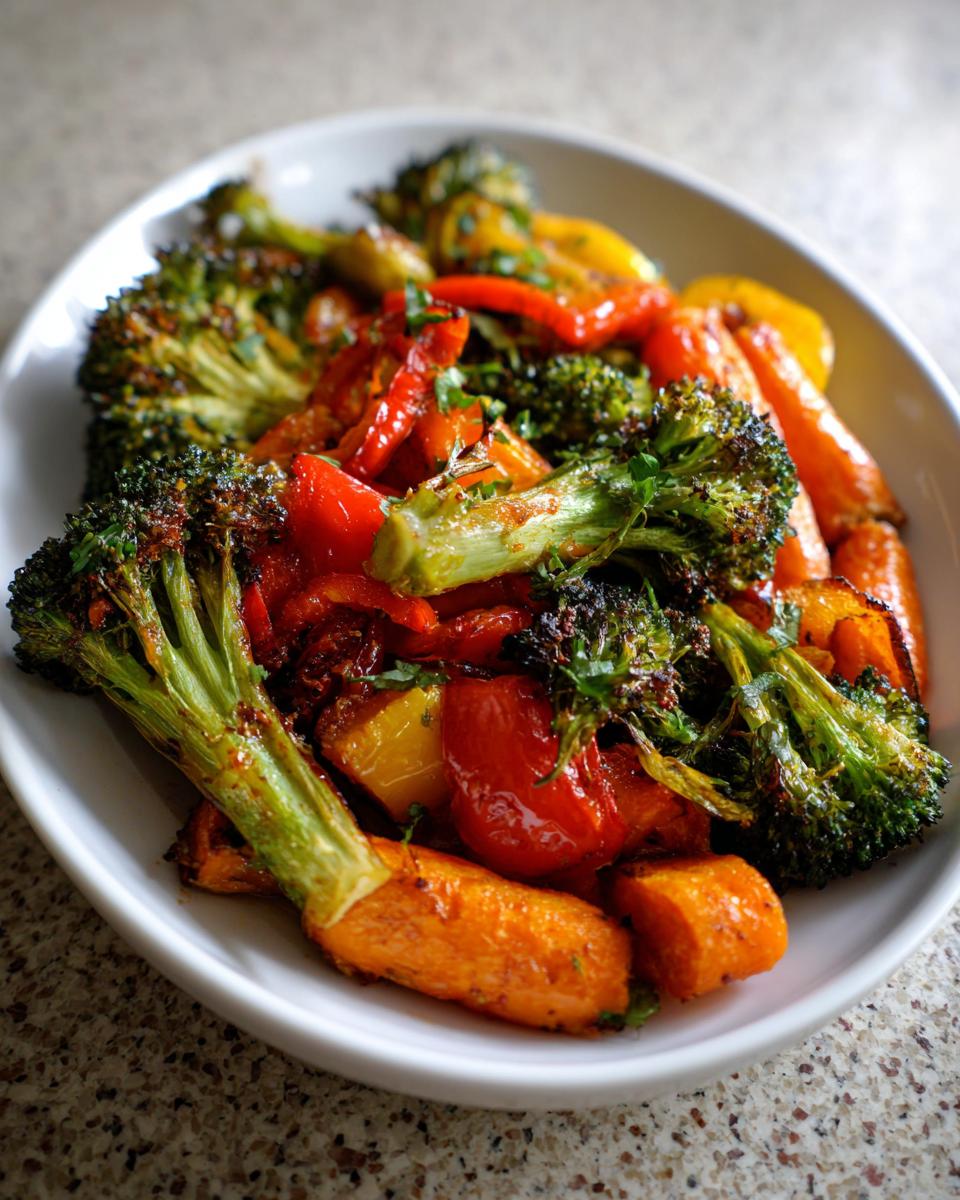
The biggest hurdle everyone faces is the dreaded mush. We’re smashing that problem right now! This **perfect roasted vegetables technique** ensures two things happen: you get those gorgeous, slightly crisp, caramelized edges that taste sweet and nutty, *and* the inside becomes fork-tender. No more steamed, bland sides, I swear.
Simple Vegetable Recipes for Weeknight Success
These aren’t fussy holiday sides designed to take up precious oven space all day. They are genuinely the best **easy vegetable side dish** for busy schedules. With only about 15 minutes of prep time and cooking in just 25 minutes, these become your go-to **healthy roasted side dishes** for any Tuesday night! Prep is quick, cleanup is minimal, and the payoff is huge.
Essential Ingredients for Flavorful Roasted Vegetables Seasonings
Okay, listen up! The secret to transforming simple produce into incredibly delicious **roasted vegetables** lies right here, in selecting the right carriers for flavor. I’ve gone through far too many bags of lackluster carrots to tell you that ingredient quality *matters*. Great ingredients, handled correctly, give us that powerful flavor we’re after.
Selecting the Best Seasonal Vegetables
This recipe is designed to be super flexible, making it the perfect base for a **best vegetable medley**. You can use whatever looks amazing at the market! But, and this is crucial, try to stick to vegetables that have similar densities. If you mix soft zucchini with rock-hard sweet potatoes, one will burn while the other stays raw. If you must mix them, just remember the trick I’ll share later on partial roasting for the denser guys.
Oil and Seasoning Ratios for Perfect Roasted Vegetables Technique
We aren’t deep-frying here; we are coating! Over-oiling is the number one way to sabotage your beautiful high-heat roast and instantly invite steam. That’s why we use just enough olive oil to lightly coat every surface—I find using a higher quality oil makes a noticeable difference in the final taste, too. The salt does double duty: it seasons, yes, but it also helps draw out just enough surface moisture to let that delicious browning happen. We load up on the kosher salt for this reason. You can see how I use salt for maximum crispness in my Parmesan Roasted Broccoli recipe if you want more crispy inspiration!
The Perfect Roasted Vegetables Technique: Step-by-Step Guide
If you want **oven roasted vegetables** that taste like they were cooked in a wood-fired oven, you have to respect the process. I learned this the hard way when I was still guessing my way through dinner! Mastering **how to roast vegetables** comes down to three non-negotiable steps. Follow this routine, and I promise you’ll see unbelievable results—flavorful, slightly smoky, and perfectly cooked every single time. You can see a great example of different vegetable combinations in this guide I found online, Ultimate Guide to Deliciousness, which really champions using seasonal produce.
Preparation: Drying and Cutting for Crispy Roasted Veggies Tips
This is where most home cooks lose the battle against mush! Before anything touches the oil, your vegetables *must* be bone dry. I mean it—wash them, then use a clean kitchen towel or paper towels to pat every single surface dry. If there’s water clinging on, that water turns to steam, and steamed vegetables are soggy vegetables! Next, cut everything into uniform, bite-sized pieces. This is key for even cooking; we want every piece to hit that sweet spot of done-ness at the same time. Consistency is what builds my confidence in the kitchen.
Oven Temperature and Avoiding Overcrowding
We are going high heat here, period. Preheat your oven to a roaring 425 degrees Fahrenheit. Lower temperatures encourage vegetables to stew instead of roast! Once we’ve tossed the veggies lightly with oil and seasonings, the sheet pan comes in. You absolutely cannot cram them together. If your vegetables are piled on top of each other, they trap moisture and steam, again leading to mush. If you need to use two sheet pans to ensure everything is in a single layer, then use two sheet pans! Give those vegetables space to breathe and crisp up.
Timing and Checking for Caramelized Roasted Vegetables
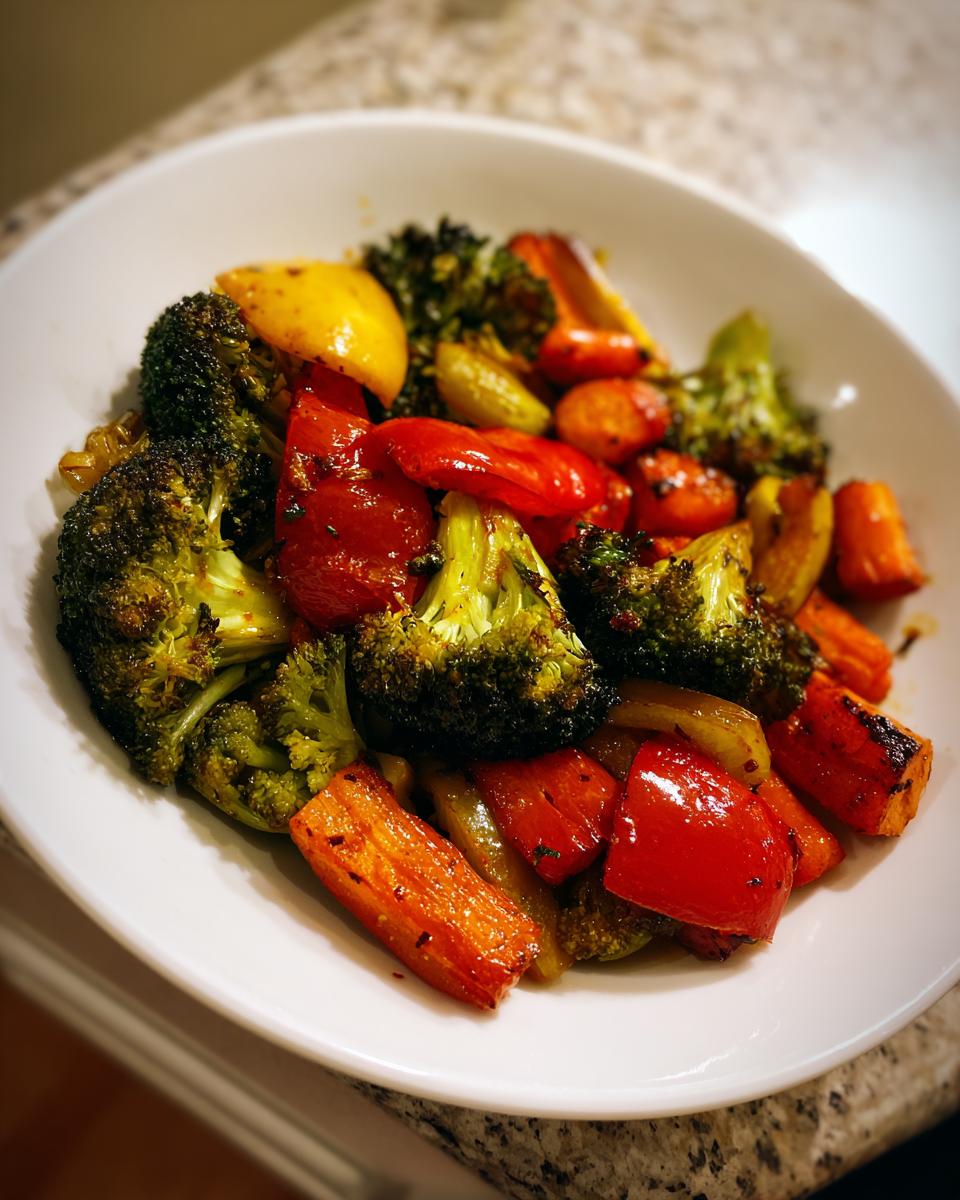
Once they are nestled snugly on the hot pans, they go in for about 20 to 30 minutes total. But halfway through—say at the 15-minute mark—you’ve got to pull them out and toss them around. This flips them over so they can brown evenly on all sides. You know they are done when they are easily pierced with a fork, and those beautiful little edges are dark brown. We are looking for those **caramelized roasted vegetables**; that’s where all the big flavor hiding!
Customizing Your Garlic Roasted Vegetables Recipe
Now that you have the foolproof foundation for perfect **oven roasted vegetables**, it’s time to make them uniquely yours! While my base recipe calls for simple Italian herbs and fresh garlic (which creates that incredible **garlic roasted vegetables recipe** aroma), the real fun starts when you begin experimenting with spices. Believe it or not, when I was road-tripping through Texas, I fell in love with adding a heavy pinch of smoked paprika and a teaspoon of toasted cumin to my carrots and broccoli. It gave them this wonderful, deep, almost smoky earthiness that paired beautifully with grilled brisket. That’s the kind of flavor layering I want you to bring to your own **roasted vegetable for dinner** rotation!
Herb and Spice Variations for Roasted Vegetables
You can swap out those Italian herbs for so many things! If you are aiming for something brighter, try dried oregano and a little dried thyme. For Mediterranean flair, use dried rosemary and a pinch of coriander. If you are leaning toward heat, a dash of cayenne pepper tossed in with the garlic powder works miracles on root vegetables like parsnips or sweet potatoes. You can find some truly inspired takes on seasoning combinations on Natasha’s site, which has a great Garlic Roasted Vegetables recipe I often reference when seeking inspiration.
Making Vegan Roasted Vegetables Shine
The great news is that this recipe, as written, is entirely **vegan roasted vegetables** friendly! We rely on high-quality olive oil and the natural sugars in the vegetables for our richness, so there’s no need for butter or cheese if you don’t want it. However, if you’re aiming for that cheesy flavor without dairy, I have a fantastic trick: toss the finished vegetables with a tablespoon or two of nutritional yeast right when they come out of the oven. It has this beautiful savory, cheesy quality. Alternatively, a generous squeeze of fresh lemon juice right before serving truly wakes up the whole dish. That final acidic element is often the missing link between “good” and “spectacularly bright” **simple vegetable recipes**.
Tips for Success with Oven Roasted Vegetables
I want you to feel completely confident every time you gather your ingredients to make **oven roasted vegetables**. When I was first starting out, I relied heavily on trial and error—and a lot of soggy sheet pans! Now that I’ve gotten deep into the science of heat transfer here in my kitchen, I want to pass along the essential survival tips gleaned from my own recipe notes. These aren’t just suggestions; they are the difference between a good side dish and a showstopper worthy of a feature picture!
Handling Dense vs. Quick-Cooking Vegetables
This is the key to a successful **best vegetable medley** where everything finishes perfectly at the same time. You can’t treat a carrot the same way you treat a bell pepper, or you’ll end up with burnt edges on one and raw, hard centers on the other. If you are using dense root vegetables—things like potatoes, butternut squash, or really thick carrots—give them a 10-minute head start in that 425°F oven *before* you add the quicker-cooking items like zucchini, mushrooms, or peppers. Just toss the dense stuff first, roast for 10 minutes, pull the tray out, and *then* add your softer vegetables, re-toss, and put them back in to finish the final 20 minutes. It takes an extra moment, but the payoff in texture is massive!
Troubleshooting Mushy Roasted Vegetables
If you’ve had issues in the past and ended up with steaming blobs instead of crispy results, I want you to look at the three main culprits. If you remember nothing else, remember these fixes, which are detailed in this great guide on technique here:
- Too Much Oil: You used too much, which is causing the vegetables to fry or steam. We want a light, shiny coat, not a puddle, on the bottom of the pan.
- Overcrowding the Pan: The heat cannot circulate around the vegetables if they are touching or piled high. They trap latent moisture, and you end up boiling them in their own juices. Use two sheet pans if you have to!
- Not Dry Enough: This is my personal pet peeve! If your vegetables aren’t completely dried—especially after washing—that surface moisture turns directly to steam the second it hits the hot oven air. Pat them dry like your dinner depends on it!
Serving Suggestions for Roasted Vegetable for Dinner
When you’ve perfected the **perfect roasted vegetables technique**, one question remains: what do I serve them with? Honestly, these vibrant, flavorful sides are almost too good to be just a side dish! They are fantastic on their own, but they really shine when used to anchor a balanced meal. Remember when I was working those brutal corporate hours? I needed **quick vegetable sides** that could elevate a simple piece of protein without adding extra cooking time to my evening. For more inspiration on making your entire dinner shine, check out my main Dinner section!
Creating a Flavorful Roasted Vegetable Medley Meal
For those nights when you want something truly satisfying for **roasted vegetable for dinner**, try tossing a generous scoop of your **roasted vegetable medley** over a bed of fluffy quinoa or brown rice. That combination alone feels wholesome and complete. If you’re serving them alongside a main course, they are phenomenal with something lean and bright. Imagine perfect **oven roasted vegetables** next to a flaky piece of grilled salmon or my incredibly zesty Lemon Chicken Piccata. Or, for a super simple, meatless option, just pile them high on a plate and top with a drizzle of good balsamic glaze and crumbled feta—instant gratification!
Storage and Reheating Instructions for Roasted Vegetables
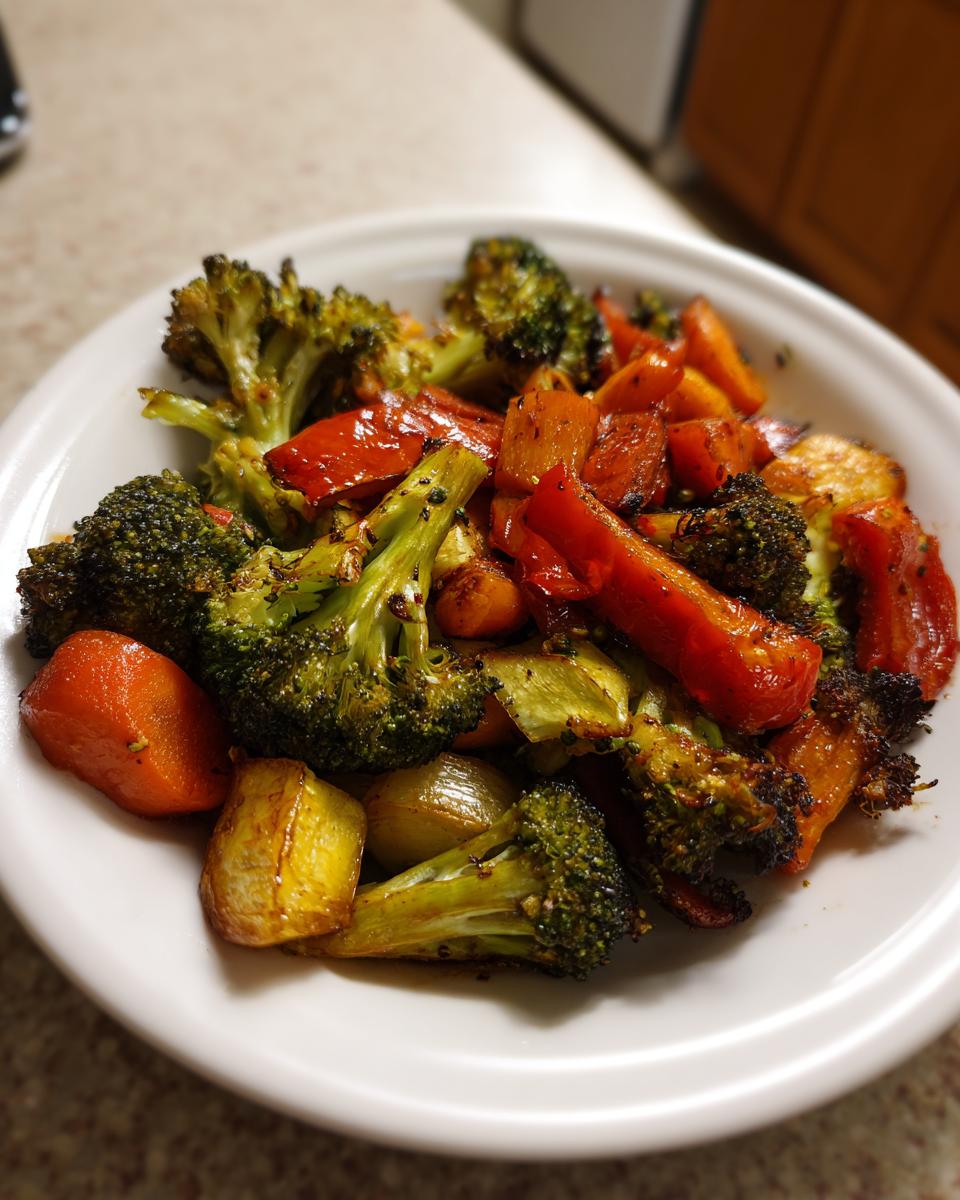
So, you made an amazing batch of **roasted vegetables**, and lucky you, you have leftovers! That’s the sign of a truly great batch, right? The great news is that because we followed the ultimate technique—ensuring they were dry and caramelized, avoiding that mushy steaming—these keep better than most! Don’t worry about them looking tired the next day; we have ways to bring that fresh flavor right back.
For storage, you want them to cool down completely before they hit the fridge. Pop them into an airtight container. I try not to stack them too deeply; if you have a very large batch, divide them between a couple of shallow containers so they aren’t completely compressed. Stored this way, your **oven roasted vegetables** should stay vibrant and flavorful for about three to four days. Honestly, they usually disappear before then in my house!
When you’re ready to reheat, resist the microwave if you can! The microwave is the enemy of crispness—it always brings back that unwelcome steam. If you want to revive that gorgeous texture we worked so hard for, spread the cooled vegetables in a single layer back on a clean baking sheet. Pop that sheet into a preheated 350°F oven for about 5 to 8 minutes, just until they are warmed through and any residual moisture has evaporated. That little bit of second roasting wakes up the caramelization beautifully. If you’re in a hurry, a quick flash under the broiler works too, but watch them like a hawk because those edges can go from perfect to burnt surprisingly fast!
Frequently Asked Questions About Roasting Vegetables
When you nail the primary technique, the questions shift from “How do I prevent failure?” to “How can I make this even better?” I completely understand! I get so many messages asking for clarity on the little details when people try this method for their **quick vegetable sides** or big spreads. Let’s tackle the common ones about **how to roast vegetables** so you feel like a pro every time you step up to the oven. If you want to see how others are using these techniques for their holiday meals, check out this great resource on Oven Roasted Vegetables for inspiration!
Can I roast frozen vegetables using this technique?
Oh, I truly wish you could! It’s tempting, especially when you’re trying to rush dinner, but no, you absolutely cannot use frozen vegetables straight from the bag with this high-heat, **caramelized roasted vegetables** method. As we talked about, the number one rule is dryness! Frozen vegetables are basically little ice blocks loaded with surface water. If you toss them with oil and throw them into a 425°F oven, that ice melts immediately and turns into a cloud of steam, guaranteeing you a batch of soggy, lukewarm disappointment. If you must use frozen, you have to completely thaw them first, and then you’ll need to dry them just as painstakingly as fresh ones. Better yet, just plan ahead for fresh!
What is the best temperature for achieving caramelized roasted vegetables?
This is where we separate the good **oven roasted vegetables** from the truly spectacular ones. For that beautiful, sweet, deep browning a.k.a. caramelization, you need serious heat, my friends. I always insist on 425 degrees Fahrenheit. Anything lower, and you risk the vegetables slowly simmering in their own juices instead of browning nicely on the exterior. If your vegetables are delicate and burn easily (like thin slices of mushrooms or zucchini), you can drop it down to 400°F, but for robust roots and cruciferous types, 425°F to 450°F is the sweet spot. It really drives off the moisture quickly so you get those crispy edges we all crave!
How long do these roasted vegetables last in the refrigerator?
Because we’ve focused so much on removing moisture—the culprit behind spoilage and textural breakdown—these **roasted vegetables** hold up wonderfully! If you store them properly in an airtight container, you can safely enjoy them for three to four days in the refrigerator. Now, I won’t lie to you; they won’t have that immediate, crisp-from-the-oven snap on day four, but they hold their flavor beautifully. Remember what I said about reheating? A quick blast in a hot oven will bring back a significant portion of that lovely texture we worked so hard to achieve!
Share Your Perfect Roasted Vegetables Creations
Now that you have the blueprint to make truly stunning **roasted vegetables**—the kind that smell incredible and convince even the most dedicated carb-lover to eat more greens—I want to see what you’ve made! Running Gourmet Gaze is all about building a community where we can share the joy of creating something beautiful and delicious. After years of cooking for myself, it’s the greatest feeling finally sharing this passion!
Did you stick with the simple **garlic roasted vegetables recipe**? Or did you get adventurous and create a holiday-worthy **roasted vegetable medley**? I absolutely love hearing which seasonal vegetables you ended up using. Your tweaks and suggestions often inspire the next batch I make!
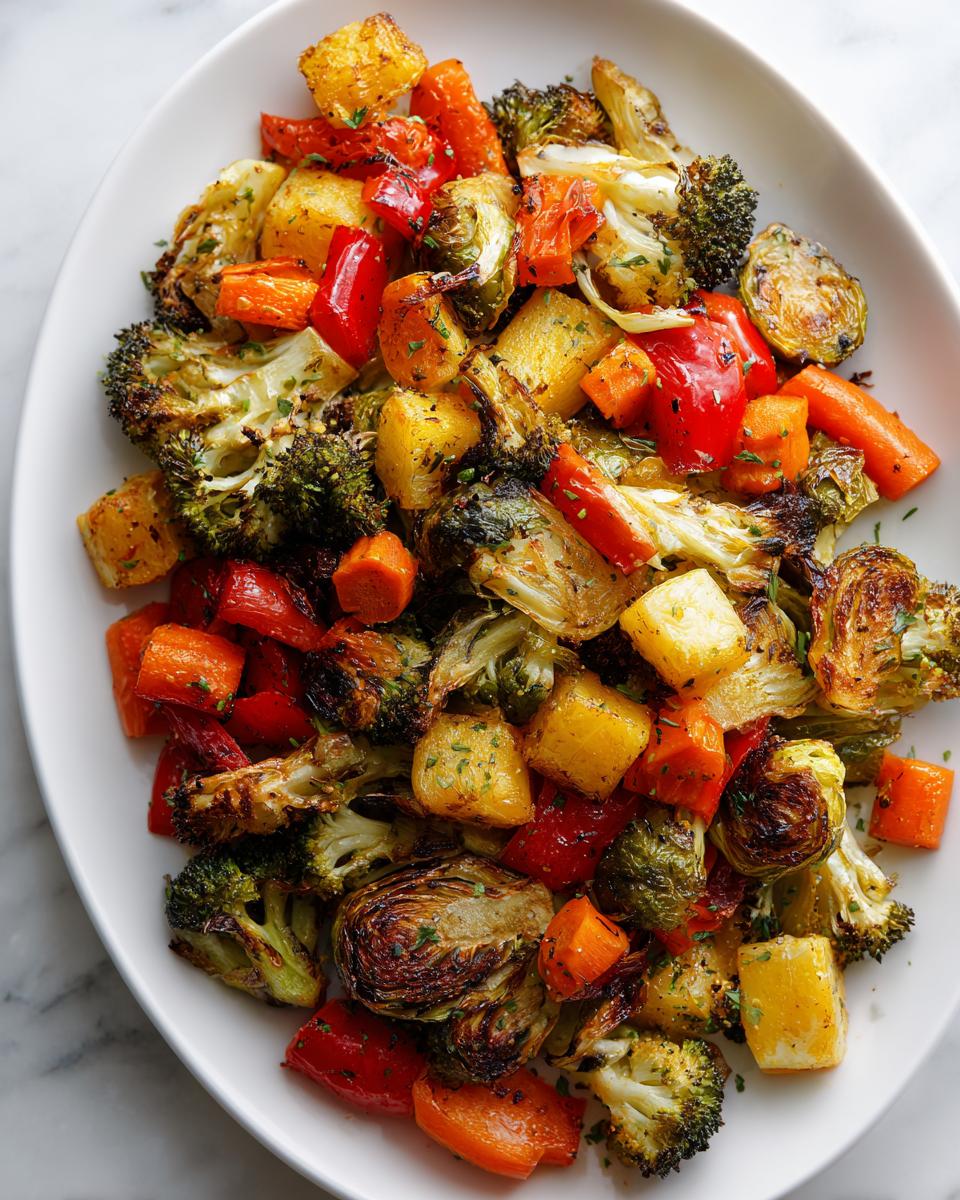
Please, don’t be shy! Drop a comment below telling me how many flames you gave the recipe—did it earn a five-star review? If you managed to snap a picture of your perfectly **caramelized roasted vegetables**, tag me on social media. Seeing your successful, beautiful plate—the “Gaze” that nourishes the soul—is truly the best part of my day. If you have any lingering questions about technique or need help customizing a particular vegetable, you can always reach out directly through my Contact page. Happy roasting, and I truly hope this becomes your favorite **easy vegetable side dish**!
PrintUltimate Guide: How to Roast Any Vegetable Perfectly Every Time
Learn the simple techniques to make oven roasted vegetables that are tender inside and perfectly caramelized outside. This versatile recipe guarantees flavorful, crispy roasted veggies for any easy vegetable side dish.
- Prep Time: 15 min
- Cook Time: 25 min
- Total Time: 40 min
- Yield: 4 servings 1x
- Category: Side Dish
- Method: Baking
- Cuisine: American
- Diet: Vegan
Ingredients
- 2 lbs mixed seasonal vegetables (e.g., broccoli, carrots, bell peppers, zucchini)
- 3 tablespoons olive oil
- 1 teaspoon kosher salt
- 1/2 teaspoon black pepper
- 2 cloves garlic, minced (optional)
- 1 teaspoon dried Italian herbs (optional)
Instructions
- Preheat your oven to 425 degrees Fahrenheit. This high heat is key for caramelization.
- Prepare your vegetables: Wash and thoroughly dry all produce. Cut vegetables into uniform, bite-sized pieces so they cook evenly. For best results, avoid overcrowding the pan.
- In a large bowl, toss the prepared vegetables with the olive oil until lightly coated. Do not use too much oil, as this causes steaming instead of roasting.
- Sprinkle the salt, pepper, minced garlic, and dried herbs over the vegetables. Toss again to distribute the seasonings evenly.
- Spread the seasoned vegetables in a single layer on a large, rimmed baking sheet. Use two sheets if necessary; overcrowding leads to mushy vegetables.
- Roast for 20 to 30 minutes, tossing halfway through the cooking time. The vegetables are done when they are tender when pierced with a fork and have browned, caramelized edges.
- Remove from the oven and serve immediately as a healthy roasted side dish.
Notes
- For crispier edges, ensure your vegetables are completely dry before adding oil. Moisture creates steam.
- If using root vegetables like potatoes or dense squash, cut them smaller or give them a 10-minute head start in the oven before adding quicker-cooking vegetables like peppers or zucchini.
- To achieve maximum flavor, use high-quality olive oil and do not skimp on the salt.
- This method works well for creating a flavorful roasted vegetable medley for weeknight dinners or holiday meals.
Nutrition
- Serving Size: 1 cup
- Calories: 120
- Sugar: 5
- Sodium: 350
- Fat: 7
- Saturated Fat: 1
- Unsaturated Fat: 6
- Trans Fat: 0
- Carbohydrates: 14
- Fiber: 4
- Protein: 3
- Cholesterol: 0